
A Food Truck Playbook for Order-Ahead and Ready Handoffs
Use order-ahead, a live ready board, and text alerts to organize demand around a small food-truck crew.
June 18, 2026
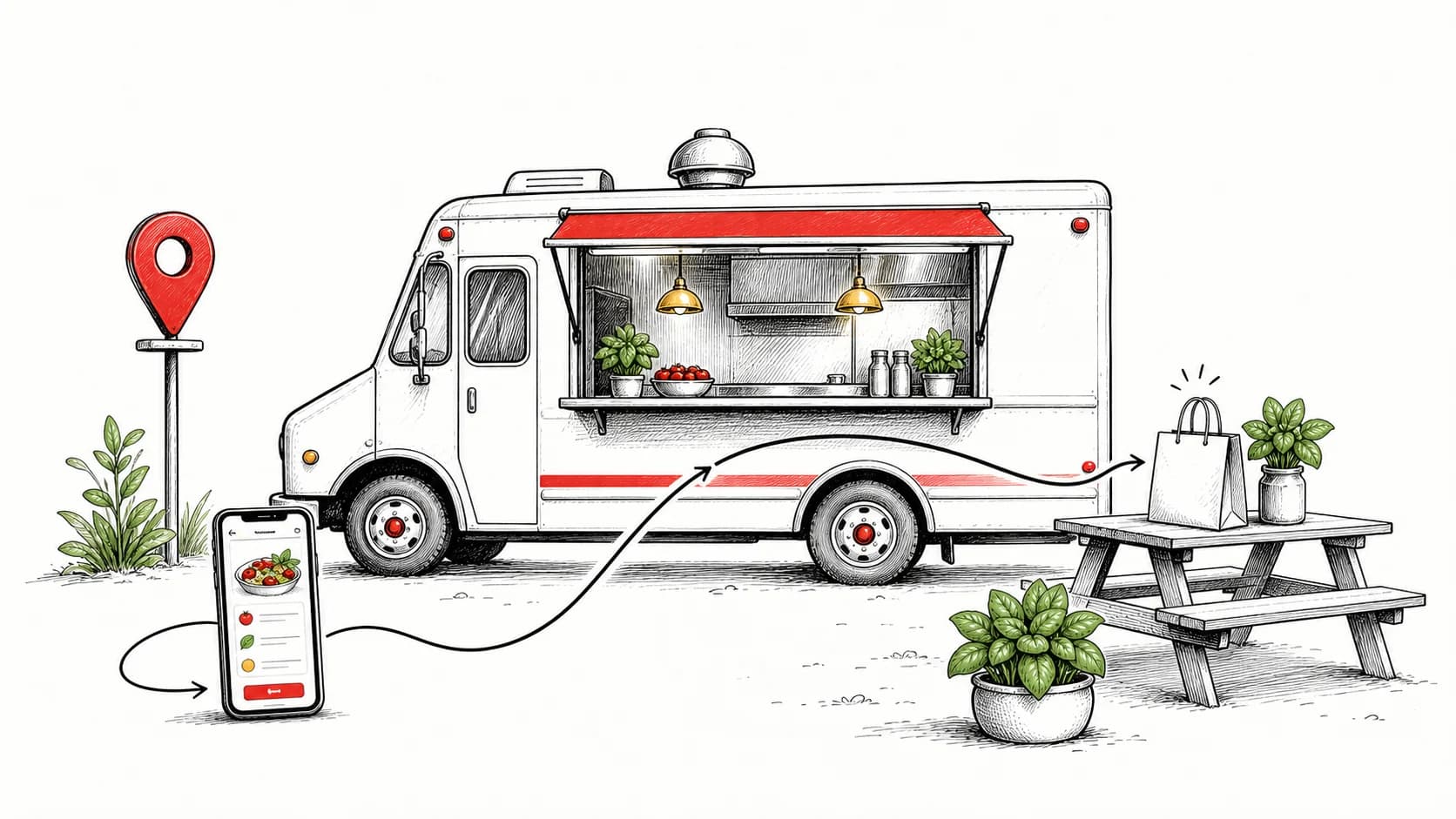
Food trucks can reduce pressure at the window by spreading demand across pickup times and notifying guests when orders are ready.
- A long visible line can discourage new orders.
- Order-ahead spreads demand across defined pickup windows.
- A ready board and texts let guests wait away from the window.
Use order-ahead to spread demand
When the line at a truck looks long, some guests may choose another option before placing an order.
Order-ahead lets guests place and pay before they arrive, while pickup windows help the operator distribute demand over time.
- Offer order-ahead pickup slots
- Cap orders per window to protect quality
- Promote the order link everywhere you post
Let guests wait away from the pickup window
Guests waiting at the pickup window can block the ordering area and repeatedly ask the crew for status.
A ready board and text alert let guests check status elsewhere while the crew and guest use the same ready information.
Publish current stops and service hours
Guests need current location and service-hour information before they can plan an order from a mobile operation.
Keep published stops and hours current so guests have one reliable schedule between services.
Continue evaluating Plate workflows.
QR Code Menu Best Practices for Cleaner Handoffs
How to design a scan-to-order menu that loads quickly, stays accurate, and hands each order cleanly to the kitchen.
Kitchen Display vs Paper Tickets: What Changes on the Line
See how a kitchen display changes station routing, ticket-time visibility, and order handling during a rush.
The Online Ordering Setup Checklist for New Restaurants
A short, practical checklist for launching owned online ordering that your kitchen can actually keep up with.